
Francisco Valero Cuevas
Francisco Valero Cuevas
Inventor of the springturn device
Inventor of the springturn device
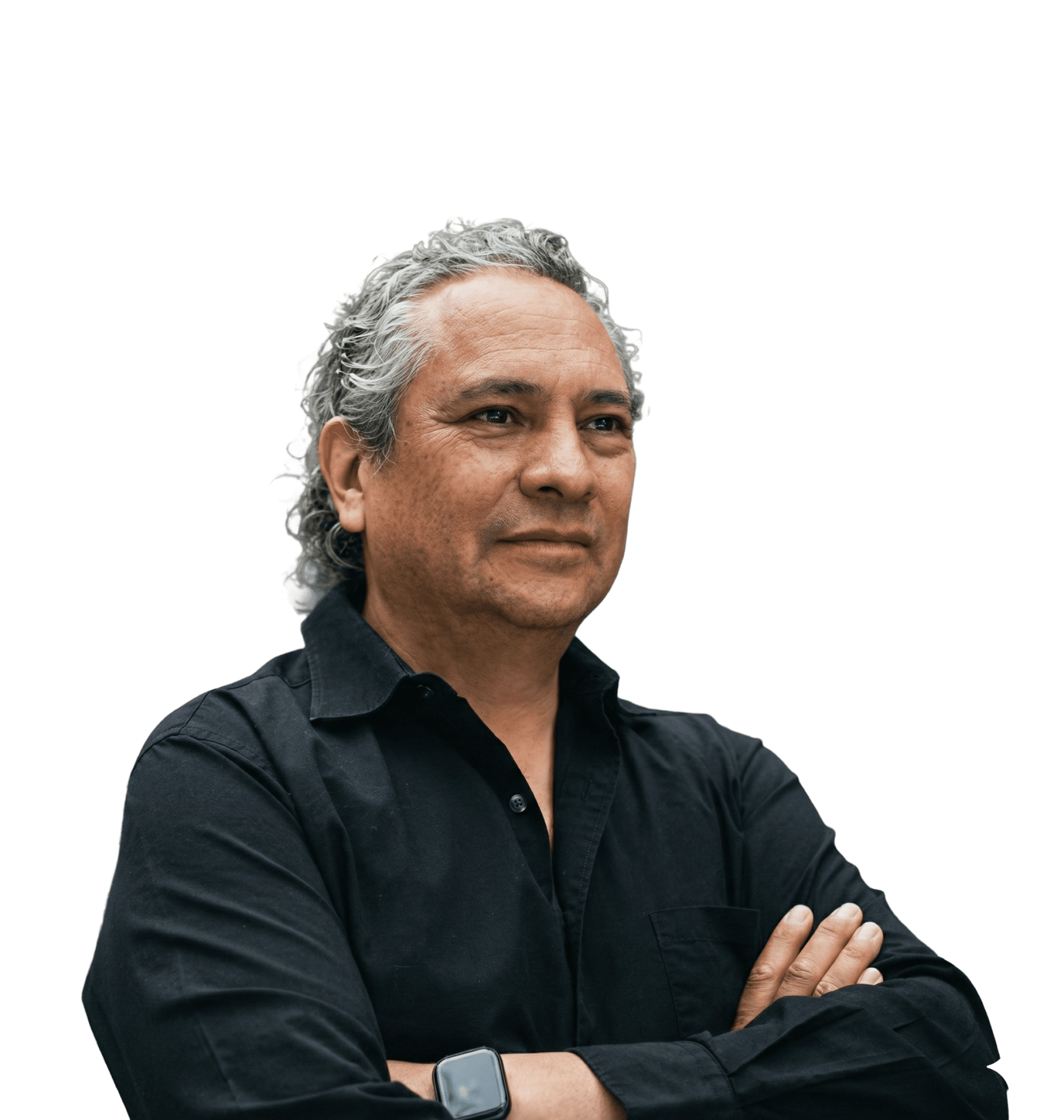
A world-renowned engineer whose deep expertise in neuromechanics underpins Springturn’s unique ability to measure and train control in unstable settings
A world-renowned engineer whose deep expertise in neuromechanics underpins Springturn’s unique ability to measure and train control in unstable settings
A world-renowned engineer whose deep expertise in neuromechanics underpins Springturn’s unique ability to measure and train control in unstable settings
Education and Professional Background
01
Swarthmore College
(B.S. Engineering, 1988)
As a Thomas J. Watson Fellow, he spent a year in the Indian subcontinent studying philosophy and learning Hindi.
02
Queen’s University, Ontario
(M.S. Mechanical Engineering, 1991)
His master’s research developed non-invasive methods to estimate the kinematic integrity of the wrist.
03
Stanford University
(Ph.D. Mechanical Engineering, 1997)
At Stanford, he created a realistic biomechanical model of the human fingers to predict optimal coordination of finger muscles.
04
Academic Appointments
After completing his doctorate, he served as a research associate and lecturer at Stanford University and later joined Cornell University. In 2007, he joined USC’s Department of Biomedical Engineering and was promoted to full professor in 2011.
Honors and recognition
National Academy of Inventors (NAI)
In 2023, he was elected a Senior Member of the NAI for innovations that benefit society.
Institute of Electrical
and Electronics Engineers (IEEE)
He is a Senior Member of the IEEE.
Institute of Electrical
and Electronics Engineers (IEEE)
Institute of Electrical
and Electronics Engineers (IEEE)
Honorary Doctorate from Swarthmore College (2017)
Recognizing his contributions to engineering and science.
National Advisory Board on Medical Rehabilitation Research
He was elected to the National Institutes of Health’s advisory board in 2021.
American Institute for Medical and Biological Engineering (AIMBE)
He is an elected fellow.
National Academy of Inventors (NAI)
In 2023, he was elected a Senior Member of the NAI for innovations that benefit society.
Institute of Electrical
and Electronics Engineers (IEEE)
He is a Senior Member of the IEEE.
Institute of Electrical
and Electronics Engineers (IEEE)
Institute of Electrical
and Electronics Engineers (IEEE)
Honorary Doctorate from Swarthmore College (2017)
Recognizing his contributions to engineering and science.
National Advisory Board on Medical Rehabilitation Research
He was elected to the National Institutes of Health’s advisory board in 2021.
American Institute for Medical and Biological Engineering (AIMBE)
He is an elected fellow.
National Academy of Inventors (NAI)
In 2023, he was elected a Senior Member of the NAI for innovations that benefit society.
Institute of Electrical
and Electronics Engineers (IEEE)
He is a Senior Member of the IEEE.
Institute of Electrical
and Electronics Engineers (IEEE)
Institute of Electrical
and Electronics Engineers (IEEE)
Honorary Doctorate from Swarthmore College (2017)
Recognizing his contributions to engineering and science.
National Advisory Board on Medical Rehabilitation Research
He was elected to the National Institutes of Health’s advisory board in 2021.
American Institute for Medical and Biological Engineering (AIMBE)
He is an elected fellow.
Research and Inventions
Professor Valero-Cuevas is internationally recognized for innovations that quantify and enhance neuromuscular control:
Professor Valero-Cuevas is internationally recognized for innovations that quantify and enhance neuromuscular control:
Professor Valero-Cuevas is internationally recognized for innovations that quantify and enhance neuromuscular control:
Measuring Strength and Dexterity
He developed portable systems that measure hand and leg function and founded Neuromuscular Dynamics, LLC to commercialize these devices.
Strength-Dexterity Test
His method for assessing hand function has been applied to adults with disabilities and children and inspired devices to measure leg function.
Robotics and AI for Rehabilitation
ValeroLab combines robotics, biomechanics and artificial intelligence to create technologies that support human function, including an AI-controlled robotic limb.
Portable Neuromuscular Training Systems
The Springturn device continues this legacy by providing a compact system that measures strength and neuromuscular control while challenging users with unstable loads.
Measuring Strength and Dexterity
He developed portable systems that measure hand and leg function and founded Neuromuscular Dynamics, LLC to commercialize these devices.
Strength-Dexterity Test
His method for assessing hand function has been applied to adults with disabilities and children and inspired devices to measure leg function.
Robotics and AI for Rehabilitation
ValeroLab combines robotics, biomechanics and artificial intelligence to create technologies that support human function, including an AI-controlled robotic limb.
Portable Neuromuscular Training Systems
The Springturn device continues this legacy by providing a compact system that measures strength and neuromuscular control while challenging users with unstable loads.
Measuring Strength and Dexterity
He developed portable systems that measure hand and leg function and founded Neuromuscular Dynamics, LLC to commercialize these devices.
Strength-Dexterity Test
His method for assessing hand function has been applied to adults with disabilities and children and inspired devices to measure leg function.
Robotics and AI for Rehabilitation
ValeroLab combines robotics, biomechanics and artificial intelligence to create technologies that support human function, including an AI-controlled robotic limb.
Portable Neuromuscular Training Systems
The Springturn device continues this legacy by providing a compact system that measures strength and neuromuscular control while challenging users with unstable loads.
Why He Is Central to Springturn?
Francisco Valero-Cuevas created the Springturn device based on decades of research into how humans control movement. His inventions demonstrate that improving neuromuscular control requires challenging the brain and muscles under unstable conditions.
By merging portable hardware with science-backed training protocols, Springturn gives athletes and patients data-driven insight into their control abilities. As the original inventor, his expertise and reputation provide Springturn with a unique selling proposition that competitors cannot match.
Francisco Valero-Cuevas created the Springturn device based on decades of research into how humans control movement. His inventions demonstrate that improving neuromuscular control requires challenging the brain and muscles under unstable conditions.
By merging portable hardware with science-backed training protocols, Springturn gives athletes and patients data-driven insight into their control abilities. As the original inventor, his expertise and reputation provide Springturn with a unique selling proposition that competitors cannot match.
Francisco Valero-Cuevas created the Springturn device based on decades of research into how humans control movement. His inventions demonstrate that improving neuromuscular control requires challenging the brain and muscles under unstable conditions.
By merging portable hardware with science-backed training protocols, Springturn gives athletes and patients data-driven insight into their control abilities. As the original inventor, his expertise and reputation provide Springturn with a unique selling proposition that competitors cannot match.
Media Appearances


© 2026 by Springturn Inc. All rights reserved.
© 2026 by Springturn Inc. All rights reserved.
© 2026 by Springturn Inc. All rights reserved.
